


I should point out that most members of this genus (Prunus) contain a toxin known as hydrogen cyanide. This is what gives many plants a bitter almond-like aroma. This can be dangerous to humans, and cause breathing difficulties, even death. However, I have, and know many people who have eaten sloes for many years with no ill effect. This doesn’t put me off, and I’m sure that anyone reading this will have eaten many fruits, nuts and pulses from supermarkets that also contain traces of hydrogen cyanide, even some jams will contain it. Hydrogen cyanide is mainly found in the leaves and the pits (stone of the fruits). Ultimately it’s your decision whether or not to use the blackthorn.
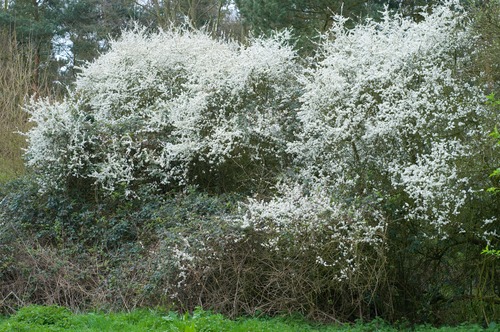
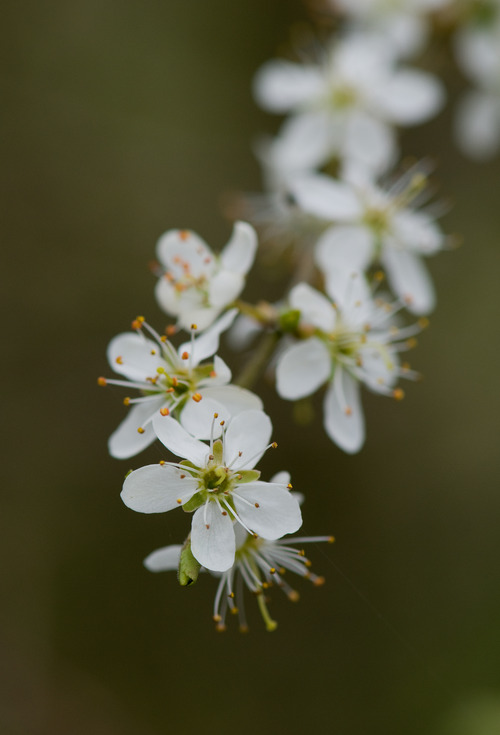
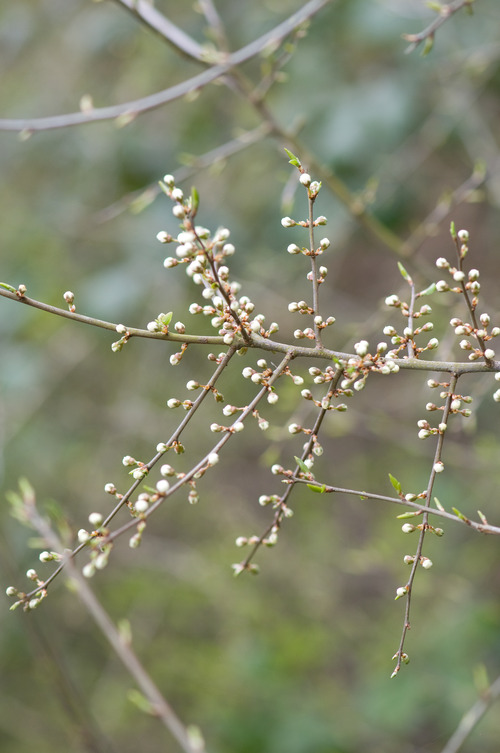
The Blackthorn Prunus spinosa is a common shrub in Great Britain (often called a sloe tree), found in most hedgerows, often near Hawthorn, which it superficially resembles. Blackthorn almost always bears its small white flowers before the leaves appear (see above). But, it’s the fierce thorns which make it famous. These thorns are exceptionally large and sharp with a brittle tip, which inevitably snaps off should they pierce your skin. This then turns septic and can be quite sore. I used to work with Blackthorn quite a lot, so have many scars to prove it; in fact about two years ago I almost lost my eye to one of these thorns whilst passing through a thicket. Even though its has cut me many times over the years I always have special memories of the blackthorn, collecting the sloes (berries) with my grandad on cold winter nights for use in cooking/drinks.
FLOWERS – the small pretty flowers are best eaten raw, or crystallised for cake decorations
LEAVES - the leaves should not be eaten, but once dried they can be used as tea
BERRIES – the berries are known as ‘sloes’ and these are very popular for making ‘sloe gin’, a potent alcoholic drink which if made with lots of sugar is more like a liqueur. I eat them straight from the bush after the first frosts of the year, but most will find them too sour to pallet.
Richard on 14/02/18
I have a bonsai Blackthorn 24 years old but it has never grew thorns ,blossom yes,
is this unusual ???
Daz(gtr)Bradford on 17/11/17
I have boiled blackthorn(stones in) with oregon grape(stones in)& rosehips(more hips than the other two)the rosehip is the base.Just boil them up add as little sugar as possible once strained ,just to knock the acidity into check & simmer as normal syrup.Pour into hot sealable kilner jars,leave to cool & i then pop them in the freezer leaving one out to use.I have vitamin c rich syrup all year round & the taste is amazingly tangy,you can tell it`s loaded with vit c.One T/spoon only.Also strain once only through a tea towel,leave it cloudy that way you have all the goodness from it,never mind what the shop stuff looks like.that`s also full of crap!!!
Sarah Mackfall on 10/10/17
We pcked loads of Sloes this weekend and bottled most of it to make Sloe Vodka.
Our 7 year old helped us and insisted we make a drink she can have. We mushed up loads of slies with sugar and a bit if water and made a cordial. Not that nice but i added a bit of my homemade rosehip syrup which made it palatable.
About 10 minutes after having the drink she has been sick. Is it a coincidence or could it be a reaction to Sloes?
Sylvia Hough on 15/05/16
My husband and a neighbour have been making this alcoholic beverage for many years. Now it involves steeping Blackthorn leaves, wine, sugar and spirit in a bucket for a few weeks. Then sieving it and bottling it into bottles with tight fitting stoppers.
Up until the past month, this product has been drunk quite readily with no ill effects. It has an almond taste and is drunk as an aperitif quite regularly in France.
I, however, have noticed on the past two occasions I have noticed a quite severe chest pain shortly after one of these aperififs. Could this be caused by the use of the Blackthorn leaves in the beverage?
Last Summer I was diagnosed with Angina.
David Makin on 18/10/15
Another home-made product you can produce using sloes is sloe jelly - either plain sloes or perhaps sloe and blackberry, or apple or even elderberry.
As to the Cyanide, it's actually amygdalin or another cyanogen glycoside which is metabolised to produce hydrogen cyanide however this is true of many stones/pits including cherries, peaches and apricots - just don't break or grind the pits and even leaving them in whilst boiling the fruit will be OK.
Tom Murray on 06/08/14
Yesh, I think sloe gin ish delishush but here, in the South of Scotland, most of the blackthorn bushes do not seem to have sloes. Are there male and female bushes or are all the good, sloe-bearing ones moving south in case of independence (only joking)?
Tom
Richard G on 24/06/14
I have eaten sloe berries for years, with no ill effects. Early berries (prior to frost) are quite tart and refreshing to eat, all be it in small numbers, later berries (bletted or post frost) are slightly sweeter, though you'd be hard pushed to eat that many, again due to their tart flavour.
Every year, for the past ten years or so, we have picked buckets full of sloe berries, from which we prepare sloe gin, which proves very popular with every one we give it to. The bushes do have some large thorns, but they are easy enough to avoid.
Andrew on 28/05/12
I remember many years ago my friend and I enjoying sloes fried over the campfire.
Caramilised they are a lot sweeter,
Really enjoy the site.
Cheers.
Rose Birkett Reynolds on 25/02/12
I have personally known of two people that were punctured by Blackthorn and the result was that one took months to heal his hand and some of the fingerss had started to lose tissue ansd muscle and the second had a really bsdly poisoned finger that again took months to heal and has left disfigurement.
BEWARE
wakefield on 05/02/12
And the juice from the berries can be used to stop bleeding and sterelize cuts and grazes but it hurts like hell.
Kris on 29/08/11
Hi Sammy, most info you need should be written above. They do, like many fruits contain toxic elements, but have been eaten and used in the kitchen for many years.
Sammy Meloy on 26/08/11
Are The Blackthorn Sloes Are Dangerous Or Poisonous To Humans ?
I Have Eaten 3 Or 4 BlackThorn Berries, I Haven't Been Poorly And Eaten It On Tuesday 22nd Aug






Samantha on 28/03/18
When do the thorns appear? I’ve looked at tons of pictures trying to identify a flowering bush on our new property and can’t see any of the terrible thorns people talk about, do they come in after the leaves??