


Cuckoo pint contains the toxic calcium oxalate, which can cause irritation to the skin and if consumed can cause a swelling of the tongue so server it can lead to extreme difficulty in breathing. You should not attempt to process Cuckoo pint unless you know exactly how to do so.
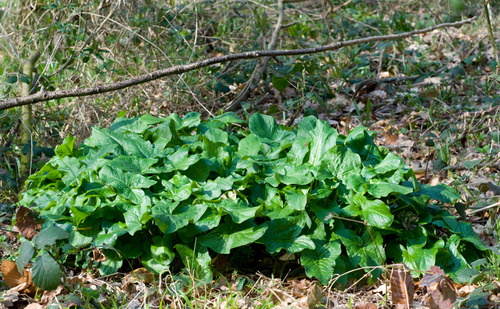
Cuckoo Pint Arum maculatum
Cuckoo pint is a common plant that may be found in hedgerows and woodlands. You may know it by another name as it has many. The most common ones are lords and ladies, Adam and Eve, Jack-in-the-pulpit, wake robin, and angels and devils. The leaves are large and glossy, they may or may not have spots on them. The plant changes throughout the year resulting in a series of different looks. I won’t go into detail here, but I will add some shots below, and update them throughout the year. Currently the shots below were taken in March 2009 & March 2012.
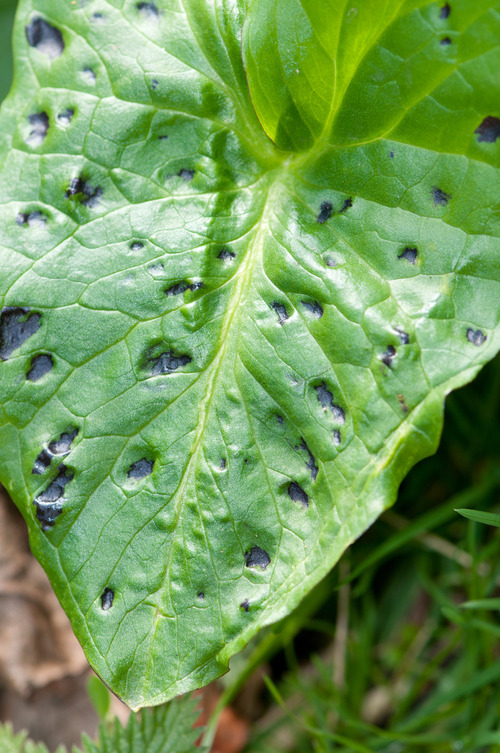
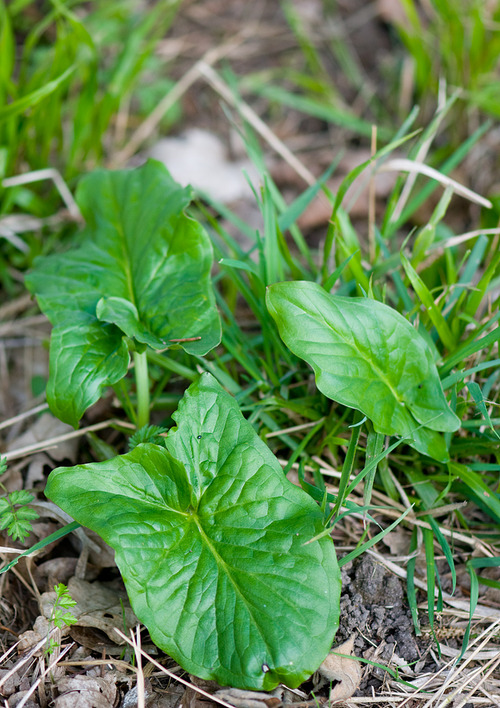
The leaves are sometimes marked with dark spots (top). But more often than not, spots are not present (bottom)
ROOT – the root yields an edible starch, which was once grown on a small industrial scale. The root needs to go through a series of processes to make it safe to use as a food source. CAUTION IS ADVISED – see above.
LEAVES – the leaves have also been eaten in the past, but these too need to be prepared correctly to avoid poisoning.
USES – the starch produced from the root has been used to stiffen laundry
scott on 12/09/16
Leaves usually "thinner" and wider than sorrel. Sorrel leaves almost spongy in depth.
Cuckoo pint is poisonous although the roots if baked or really boiled are edible and taste a bit like water chestnuts. I've eaten them but advise against anyone doing so!
Abi Fitzgerald on 29/01/16
I also have mistaken the leaves of this for wild sorrel! I only nibbled a little bit and spat it out after realising it did not taste like sorrel, but was left with a slight burning sensation on lips and end of tongue for a few minutes!
Liz on 30/05/15
My dog has just eaten the yellow spike from this plant is it dangerous ?
shaun parker on 13/08/14
I know this plant well and equally have common sorrel growing alongside the cuckoo pint. A pretty alarming mistake. I dab in a little bit of forraging and tell some of my staff that are new to the game this:
- The cuckoo pint has a line that traces the edge of the leaf, approx 2-5mm in from the edge. Sorell does not
- Early in the year this is key to identification when both plants can be of similar size.
- taste test is crucial, sorrel has a citrus aplle skin type taste and is lovely. Cuckoo Pint I am assured has a peppery then burning taste. If it burns rinse immediately.
- If you are uncertain go look for some wood sorrel, it is easier to identify with a classic sorrel taste.
Kris on 16/10/13
Hi Paul,
Try and keep your dog away from this one, it's an important plant in nature, but it's toxins are quite nasty.
Cheers
Kris
pambur1@ntlworld.com on 13/10/13
Is this plant safe around dogs mine is quite fond of having a nibble of the odd plant
Kris on 10/03/12
This confusion seems to be a common theme over the past few weeks. I'll try and get a new page up to help you all out when it comes to a clear identification of both. I hope to get some fresh images to go with it too, so watch the recent blog posts over the next few days. Thanks.
Monika on 10/03/12
I have just had the same experience as Rosanne and Dyfan and realised my mistake immediately. It seemed to me when I compared the two plants, which grew side by side, that Sorrel leaves curl backwards when young and Arum forwards. I don't know if this is reliable though.
Kris on 09/03/12
Dyfan,
I've sent you a more detailed email, but some basic keypoints are...
1) Sorrel leaves (unless cultivated) are usually no larger than your little finger
2) Sorrel leaves are much smaller and lack the dark patches (although the patches are not always present on Cuckoo-Pint)
3) They both grow in different environments
4) Cuckoo-Pint leaves are crumpled and shiny
5) Sorrel leaves are quite smooth, and usually dull, although they shine up a bit with age
Dyfan Graves on 05/03/12
This looks very similar to Sorrel - how on earth do you tell the difference?
I saw a plant by a river with leaves like a Sorrel leaf, and had a chew without swallowing but with no lemony taste (didn't taste of anything) and had a tingly feeling on my lips and end of tounge for a few minutes afterwards, so i think it might have been this. Lucky i know how to test a plant!
I would very much like to know how to tell the difference between sorrel and other spear-like leaved plants! Thanks!
paula on 02/08/11
Did Rosanne Adams,think at the time that Cuckoo Pint was a deadly poisonous plant,silly to do that at the time.Although it is a pretty plant.
Dr Stephen Merrett on 10/07/11
Thank you so much for the insert on the cuckoo pint; I have several in my garden in Wells, Somerset.
rosanne Adams on 06/03/11
I was stupid enough to nibble the end of a stalk thinking it was wild garlic. I had a strong reaction of burning in my mouth and was quite alarmed thinking it could get worse and my throat would swell up. Luckily it was only a nibble. I shall be more cautious in future!






Joanna on 14/04/18
never try unknown plants while having cold
(and therefore inhibited sense of smell and taste)!
I also mistook the leaves for the wild sorrel,
I nibbled on a young leaf before realizing it was not sour but slightly sweet.
I did not swallow it, and spat it out but was rewarded by tingling mouth and tongue for more than 12 hours..
aghrrr